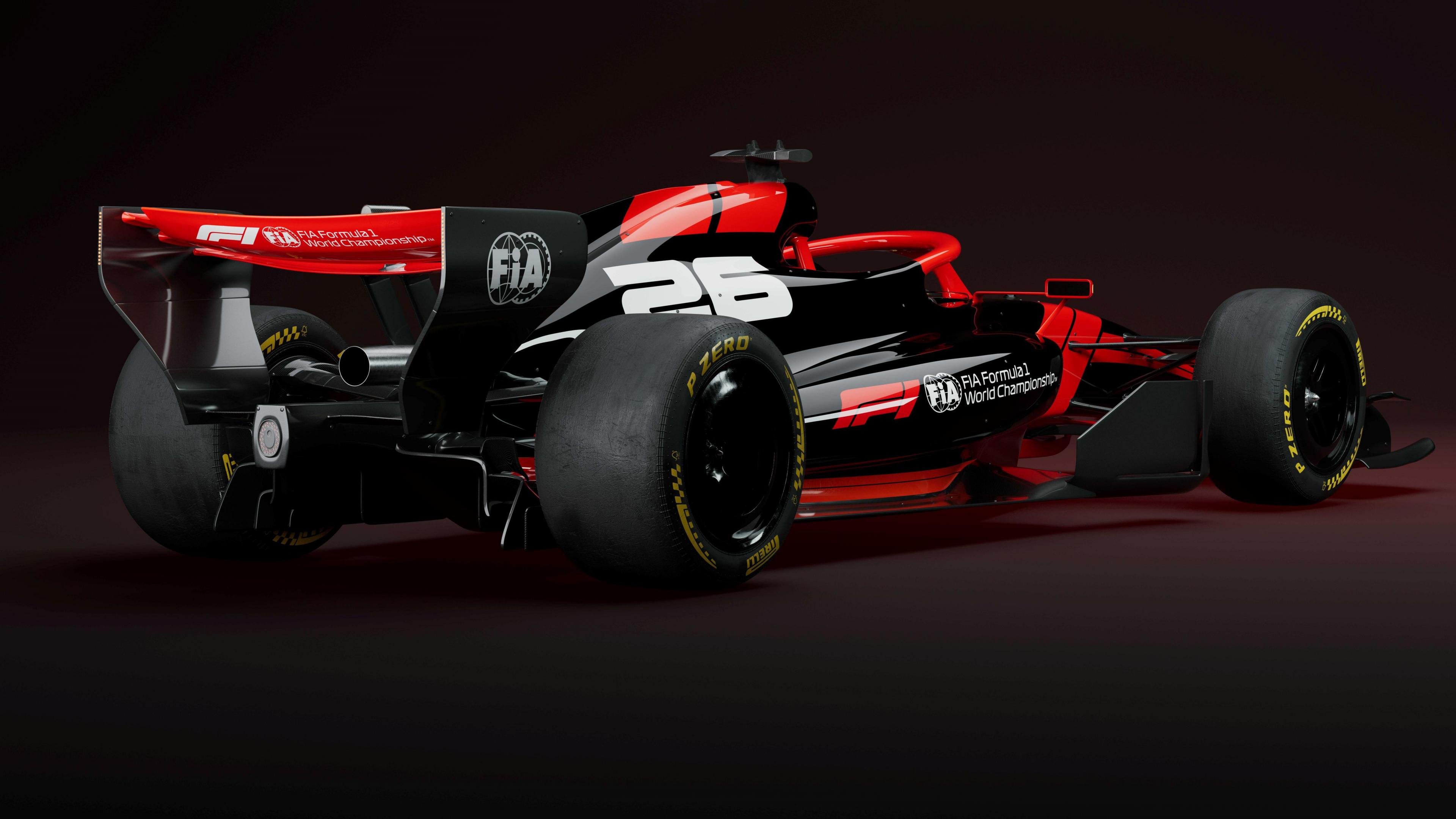
The 2026 cars are set to be smaller, nimbler and more environmentally friendly relative to present-day cars.
F1 has introduced the official vocabulary that will be used to reference the intricate details of its new 2026 technical rules.
The championship is implementing what is potentially the biggest rules overhaul in its long history for the 2026 campaign, featuring new chassis and engine rules and the mandatory use of eco-friendly fuels.
The new power units, which retain the hybrid V6 layout, boast a substantially higher energy storage, requiring key advancements in the vehicles' aerodynamic design.
Over a race distance, drivers will tactically deploy battery power – including during qualifying laps – to achieve the optimal result.
Extensive fan consultation were undertaken with a diverse audience, including long-time followers and newcomers, to determine which terms would improve understanding of the main elements of the new regulations.
The primary aim was to present a series of complex technical aspects of the racing as accessible as possible for the broadest viewership.
Consequently, previous placeholder terms for some systems – such as "alphabetical mode names" for the adjustable aero – have been discarded in favour of descriptive names that clearly indicate the actual function of the system.
What's the New Technology?
According to rule-makers that competitors will have more power to make decisions regarding power usage, harvesting, and conservation.
The new regulations introduce a set of functions that will be clearly indicated on television graphics to improve the audience's understanding of the strategic duel.
- Overtake Mode: This takes over from the present overtaking aid. It provides a burst of extra electrical energy deployable when a competitor is close behind the vehicle in front to execute an overtaking maneuver.
- Boost Mode: This is a on-demand power boost from the hybrid system that can be used in offensive or defensive moves. It provides the pilot full engine and battery energy at the activation of a control.
Both of these strategic tools will have to be deployed strategically, as the overall battery capacity is capped.
- Active Aerodynamics: Both the front and rear wings move automatically – flattening on the straights for reduced drag and top speed, and angling down in the corners for peak grip.
- Recharge: Cars can harvest energy with energy harvested under braking, or during coasting at the conclusion of a straight or in sections where only reduced throttle is used.
2026 Car Specifications
The 2026 cars will be smaller and lighter than this year, with a distance between axles cut by 200mm to 3,400mm, overall width reduced by 100mm – down to 1,900mm – and the lowest permissible weight decreased by 30kg.
Cumulative downforce is expected to drop by approximately a significant margin, although squads will undoubtedly recover some as they refine their designs.
Aerodynamic drag has been cut by 40%. The vehicles will employ adjustable aero systems – front and rear wings will open on the straight sections to cut resistance and increase straightline speed and click back into place for peak handling.
Pirelli tyres will keep 18-inch rims, but the tyres themselves will be reduced in width, by a quarter-centimetre on the front and three centimetres on the rear.
2026 Engine Regulations
The new power units will have an near-equal balance in horsepower generated by the ICE and the battery and motor, a rise from about 20% electrical under present rules.
The ERS setup is streamlined through the removal of the MGU-H, the intricate and expensive component that recovered energy from the exhaust turbo.
Every car on the grid will be obliged to compete on 100% sustainable fuel, produced using plant-based materials or synthetic production methods.

